


Page 6 - #RealDirt - The Real Dirt on Farming: Saskatchewan Digest Edition
P. 6
3 Farmers: the active environmentalists
Canada is a world leader in farm environmental programs. As farmers, we live where we work and we depend on healthy soil, water and air to grow crops and raise livestock. We’ve come a long way from the “good old days” – here are some of the things we’re doing to help the environment:
ffffffff• We rotate crops. Because different pests attack different crops, we plant different crops in the same field every year to help control them. This also keeps nutrients in the soil as different types of crops need different nutrients to grow.
• We’ve stopped plowing as much. Not working the ground as often keeps soil healthy and prevents erosion. We’re now using a “no-till” or “conservation tillage” method: stubble and other leftovers from the previous crop are left on the field and seeds are planted directly into the soil. Seventy per cent of Saskatchewan farmers use no-till practices, which means lower levels of greenhouse gas emissions since there is less time, labour and fuel spent preparing a field for planting.
• We spend money on improvements. In all Canadian provinces, the “Environmental Farm Plan” is helping farmers evaluate farms for environmental concerns and set goals and timelines for improvement. In Saskatchewan, the Farm Stewardship Program supports
farmers and ranchers in making environmental improvements on their farms,
and more than 12,000 Environmental Farm Plans have been completed by Saskatchewan farmers since 2005.
• We use good bugs to fight bad ones. “Integrated Pest Management” is
a method that lets us work together with nature to monitor and control pests by combining different tactics, whether they’re mechanical (tillage), cultural (good bugs) or chemical (pesticides).
“Looking after the land and my cattle is important to me. It’s an incredible privilege that I want to pass on to
Matthew Fleury, cattle rancher, Aberdeen, SK
4
Pests are called pests for a reason – because they will eat our food and destroy our crops. Pesticides in appropriate and approved quantities, used together with other methods of crop protection, have helped us grow more and better quality food – namely fruits, vegetables and field crops. Being able to protect plants against pests and diseases reduces the risks of food shortages due to crop failures which also helps keep food prices affordable.
Farmers take pesticide use seriously too. We live where we work and eat the food we produce, so making sure we’re using products responsibly is very important to us and our families.
”eration, just like my grandfather did.
the the next gen
Why do farmers use pesticides?
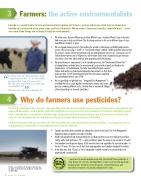
Farmers use high tech sprayers like this one to apply crop protection products safely and responsibly.
6 The Real Dirt on Farming
• Canada’s pesticide safety standards are among the strictest in the world. The Pest Management Regulatory Agency regulates pesticides in Canada.
• Modern lab equipment and testing methods are so advanced that we can now find parts per billion (really, really small quantities). FYI – a part per billion is about the same as one second in 32 years!
• The Canadian Food Inspection Agency (CFIA) monitors fruits and vegetables for pesticide residues. In the last 10 years, 99.6 per cent of fresh fruits and vegetables met Canadian standards for residues.
• It can take more than 10 years of strict, independent scientific review for a new pesticide to be approved and considered safe.
... each year an environmental group from the United States publishes a “dirty dozen list” of fruits and vegetables it claims contain high pesticide residue levels? Scientists at the University of California-Davis and elsewhere, however, have largely debunked this myth.


