
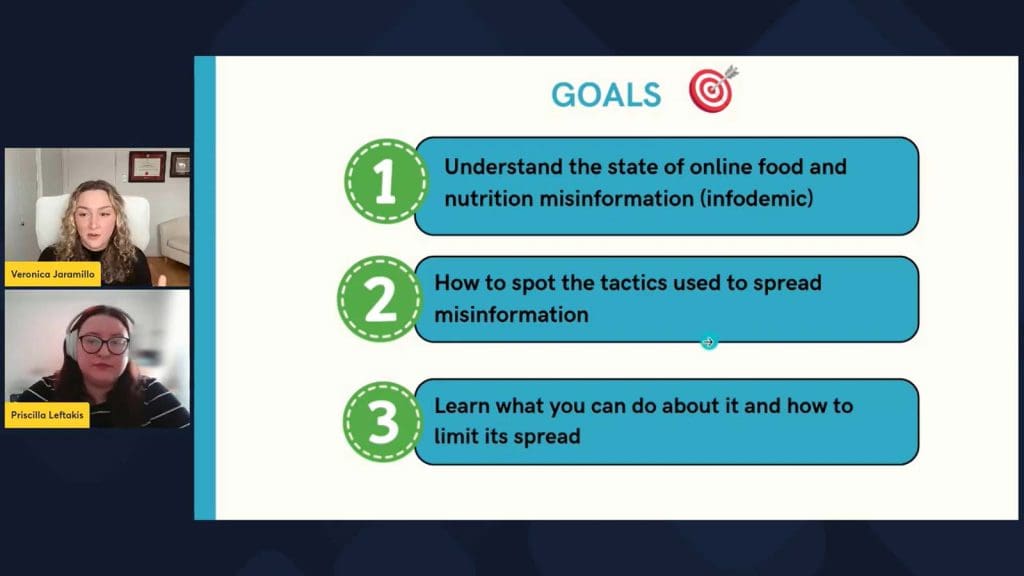
This spring, Farm & Food Care and Canadian Food Focus were pleased to present a webinar with food scientists Veronica Jaramillo and Priscilla Leftakis, founders of The Food Truth Project. Jaramillo and Leftakis began The Food Truth Project in 2023 as a way to promote science literacy and debunk misinformation about food, nutrition, agriculture and wellness.
The webinar was about how to spot misinformation and how to reduce its impact and circulation. Food and health professionals and agriculture communicators across the country joined the call to discuss the deluge of false claims and half-truths that people deal with every day.
“All this information encourages unrealistic information about body, food, lifestyle…distrust toward government, food industry, farming—and it is greatly influencing our purchase and consumption habits,” Jaramillo explained.
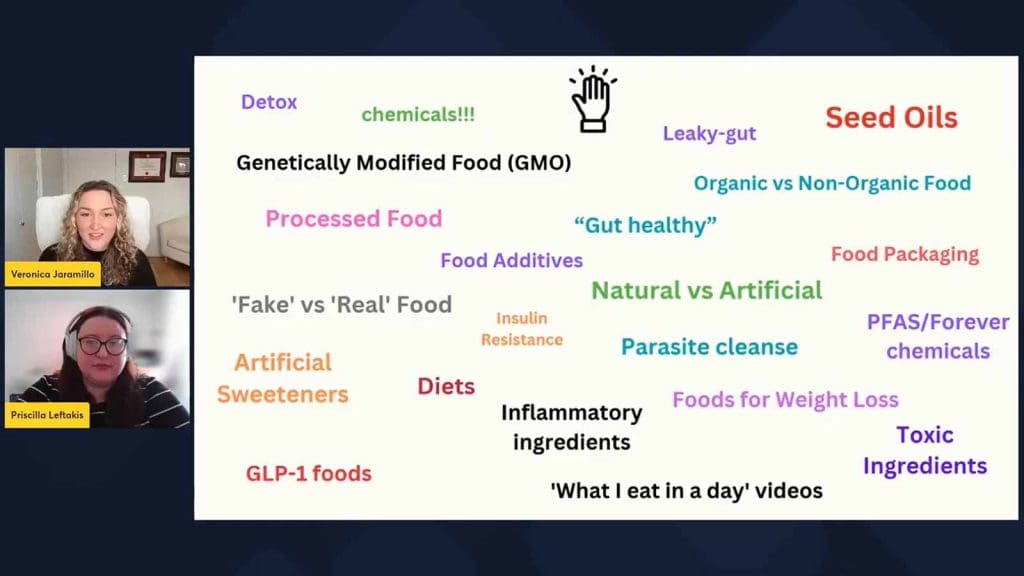
Tactics being used to spread misinformation
Social media algorithms supercharge misinformation by boosting highly emotional content and keeping people online as long as possible.
Leftakis and Jaramillo pointed out the four main tactics that are used to spread misinformation:
- Fearmongering: people respond to claims that invoke fear and are more likely to pass it on when strong emotions are involved
- Appeal to science or authority: misinfluencers often use scientific terminology and state credentials without any evidence to encourage belief in their claims
- Appeal to nature fallacy: promoting the assumption that something is better because it is ‘natural’ or worse because it is man-made
- Using spokespeople from trusted groups: often misinformation comes from people claiming to represent an aspect of the appeal to nature or authority
Avatars have entered the chat
A new source of misinformation in this last group is artificially created avatars, who look and speak like real people, but are not actually real. The speakers shared videos of AI-generated avatars of an Amish woman and Chinese medicine practitioner with thousands of followers, despite the fact that these are not real people.
What can people do to counter misinformation?
Jaramillo and Leftakis gave several suggestions to identify and stop misinformation:
- Check qualifications: is this person a credible expert in their field, or an influencer?
- Look for evidence, not just opinions or anecdotes
- Watch for fear-based or absolute claims
- Cross-reference with multiple reputable sources such as government or health organizations
- Ask: are they selling something?
- Remember that credible information includes nuance, not extremes
- Pause and think before sharing contentious information
- Click on ‘Not Interested” in Instagram and Facebook to prevent ongoing misinformation from the same stream
“75% of online content is shared without ever clicking through or reading,” said Leftakis, citing a 2024 study from Nature Human Behaviour. “Usually, we share based on headlines and not what the actual information is.”
Thanks to all partners for collaborating to present this information: