
March Impact Report 2026
Farm & Food Care Saskatchewan now represents 84 organizations, farms and individuals from across the province that share a common goal to help people understand food and farming. This Impact Report page is intended to provide members with up-to-date information about the work we are doing to engage people and improve the public’s trust and pride in agriculture. Please share this information, stats, graphics and activities with your respective boards and memberships! We will provide new Impact Reports each Spring, Summer, Fall, Winter – so check back periodically. Please reach out if you would like additional details.
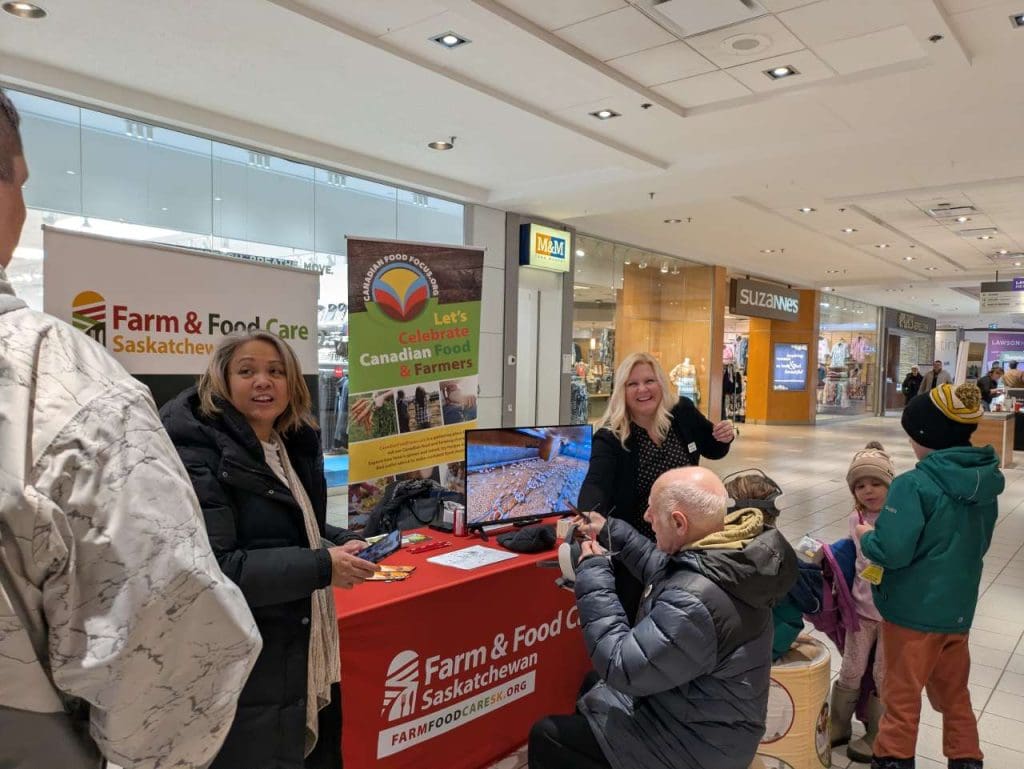

Youth Attendee at Ag in the City
on viewing the virtual farm tours at the FFC SK exhibit, February 19, 2026March Metrics
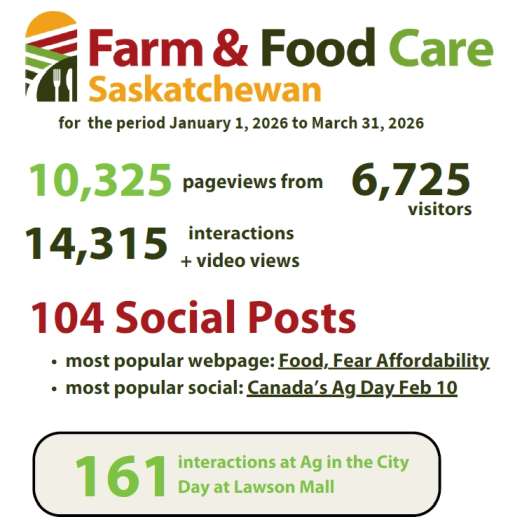
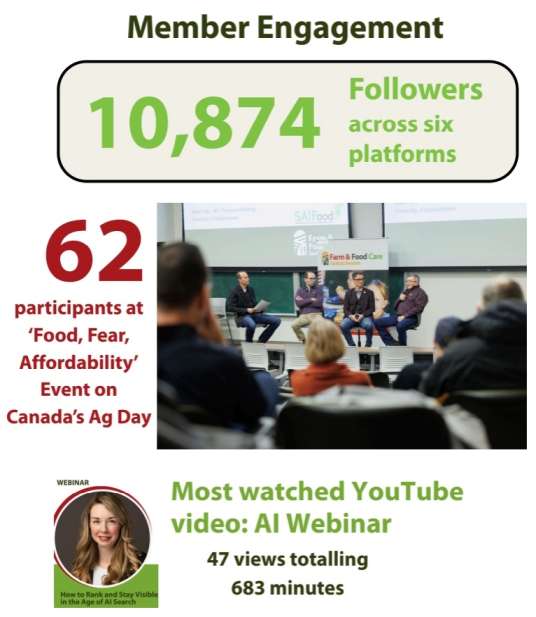
Our Engagements
- Jan 13: CFF Interview with FarmScape
- Jan 13-14: Saskatchewan Crops Forum, Saskatoon
- Jan 14: FFCSK/CFF Presentation to Sask Oat AGM, Saskatoon
- Jan 22: FFCSK Presentation, Sask Beef Industry Conference, Saskatoon
- Feb 2,3,9,11: FFCSK Lectures to first-year Agriculture Students, USask
- Feb 10: FFCSK Food, Fear, Affordability on Canada’s Ag Day, Saskatoon
- Feb 10: CFF Exhibit at Future of Food Conference, Ottawa
- Feb 11: CFF Meeting with National Advisory Council, Ottawa
- Feb 19: FFCSK/ CFF Exhibit at Ag in the City Day at Lawson Mall
- Feb 22: Reception for Sask TV Series Project, Saskatoon
- Feb 24: CFF Webinar on Benefits & Recipes of Fermented Foods
- Feb 26: FFCSK Speaker on Primary Ag at Palette Skills Panel, online
- Feb 26: FFCSK attended Ag Communicator Winter Meeting, Saskatoon
- Mar 3,5,10,12: FFCSK Lectures to fourth-year Agriculture Students, USask
- Mar 7: FFCSK guest at CHEP Good Food Youth Leaders Tour, Saskatoon
- Mar 13: FFCSK & CFF present at AAFC Consumer Demand Roundtable
- Mar 18: FFCSK Presentation to RM of Montrose, Delisle
- Mar 18: FFCSK Interview with Farmscape on Sask Open Farm Days
- Mar 25: FFCSK at APAS National Policy Framework Conference, Saskatoon
- Mar 31: FFCSK, CFF attended CCFI Webinar on Consumer Perceptions
Where to find us
- Apr 15: Canadian Centre for Food Integrity AGM, online
- Apr 18: Sask Agricultural Hall of Fame: Joe Kleinsasser induction, Saskatoon
- May 1: FFCSK presents Speak Up Workshop to Next Gen Mentorship, Regina
- May 13: FFCSK presents learning workshop for SCIC employees, Regina
- May 30: FFCSK/CFF attends Sask Agri-Value Forum, Saskatoon
- Jun 9: FFCSK presents at Horizon School District Ag Event, Humboldt
- Jun 23-27: Cdn College & University Food Service Association, Ottawa
- Jul 7-9: CFF Farm & Food Tour, Saskatoon
- Jul 21-23: FFCSK at Ag in Motion, Langham
- Aug 8-9: FFCSK’s Saskatchewan Open Farm Days, province-wide
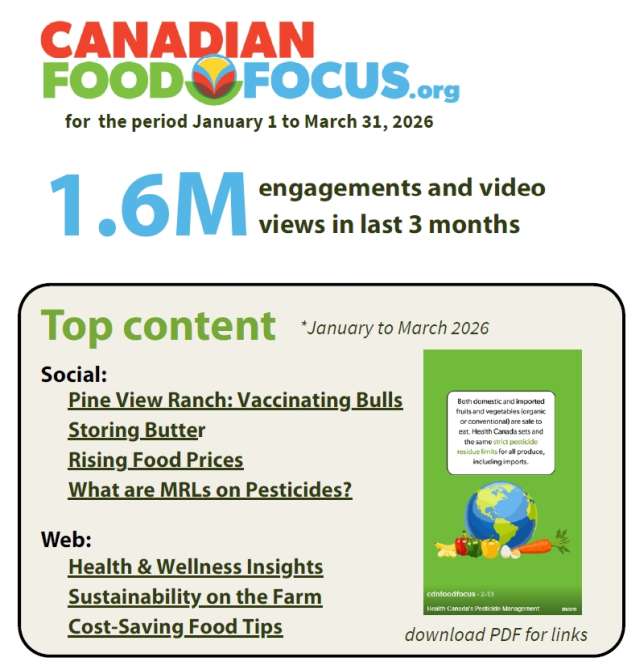
Canadian Food Focus Heads To Ottawa
Canadian Food Focus staff was pleased to take part in the 2026 Future of Food conference held in Ottawa on Canada’s Agriculture Day, February 10, 2026. More than 900 attended the national event to celebrate our sector and learn more about innovation, trade, infrastructure, investment and diversity. It was great to hear presentations from small and large Canadian farmers, economists, policy makers, researchers and some of Canada’s largest food manufacturers. Farm Credit Canada also launched their #LetsGrowCanada campaign at Future of Food 2026.
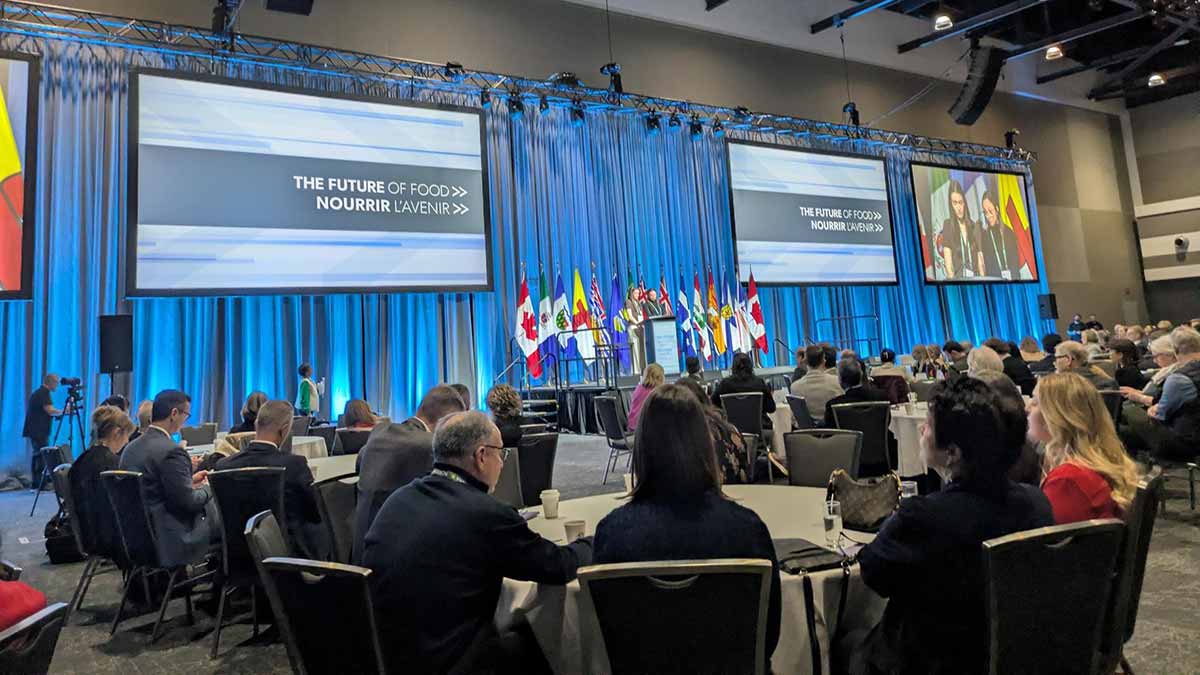
Organized by Farm Credit Canada, Canadian Food Focus was one of several national organizations invited to host an exhibit at the event to share about the work we do to engage consumers with farming and food. The Future of Food was a fantastic opportunity to connect with our partners and stakeholders from right across the country.
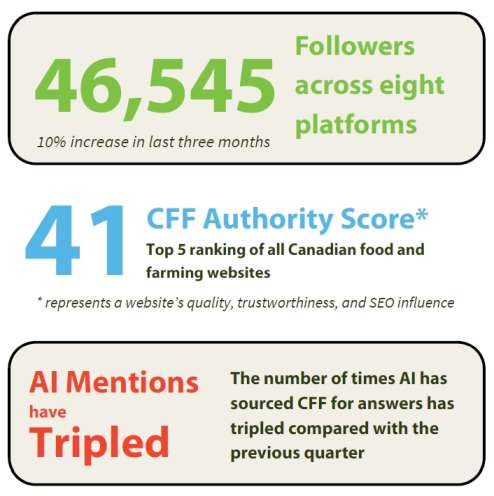
Many who stopped by our booth were fascinated to hear more about how Canadian Food Focus has achieved exceptional AI visibility in consumer online searches due to our high authority score, exceptionally high sentiment rating, cross-sector validation, and considerable breadth of content spanning all types of agriculture and food topics.
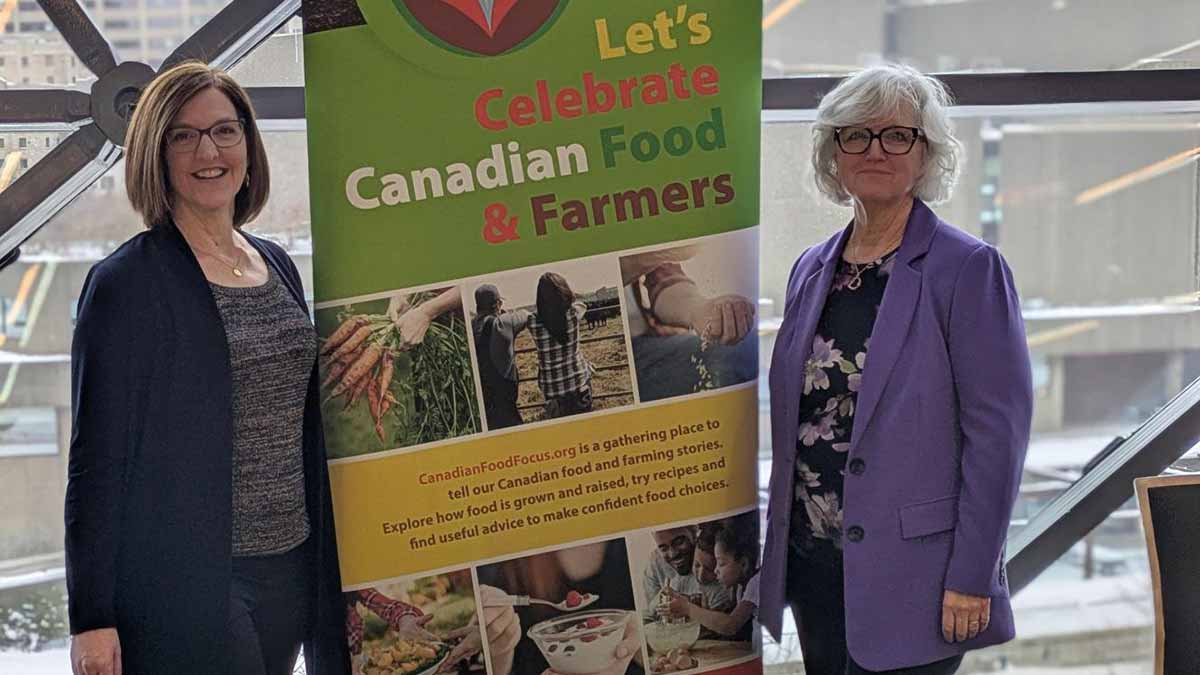
While in Ottawa, we also met with some of our national partner groups, including Dairy Farmers of Canada, Canadian Food Innovation Network, Canadian Federation of Agriculture, Chicken Farmers of Canada, CropLife, and Egg Farmers of Canada.
We also took the opportunity to host a meeting of several stakeholders and members of our Canadian Food Focus National Advisory Council. Our group delved into how generative AI ranks and selects its sources for AI-generated answers to search queries and ways we can collaborate across the ag sector to improve accuracy and reach of farming and food information.
Canadian Food Focus is grateful to collaborate with so many dedicated partners across Canada every day and appreciative of opportunities like Canada’s Agriculture Day that brings stakeholders together for these rare in-person meetings.
See more articles about our activities with Canadian Food Focus here: https://cffpartners.org/our-impact/
Share this report
Farm & Food Care Saskatchewan’s purpose is to create collaboration and cooperation within the Saskatchewan agriculture industry to drive support for consumer engagement and positively shift the mindset of consumers about food and farming. We encourage members to share elements from this impact report with their organizations in presentations, reports and meetings. Please reach out to us if you would like additional information.